
GiggleFIT
Therapeutic Play Gym

Innovating Hope, One Move at a Time
GiggleFIT TPG is a research-based exercise system for children with medical complexity; designed to overcome movement poverty and community rehabilitation access barriers. TPG provides adaptive play opportunities in hospital, home, school, and community settings.
Support at the head and trunk allows this child to play in the grass while improving flexibility, strength, cognition, breathing, and fine motor skills
We are pleased to offer Therapeutic Play Gyms for all ages/stages of childhood; from newborn infants through adolescents.
Neonatal Therapeutic Play Gym (NEO)
NEO is a Neonatal Therapeutic Play Gym (TPG) for the 100,000 infants born each year in US hospitals who struggle to move in key developmental positions. They experience long initial hospitalizations and expensive secondary impairments of immobility. They discharge home into communities with an 80% deficit of early intervention therapy providers.

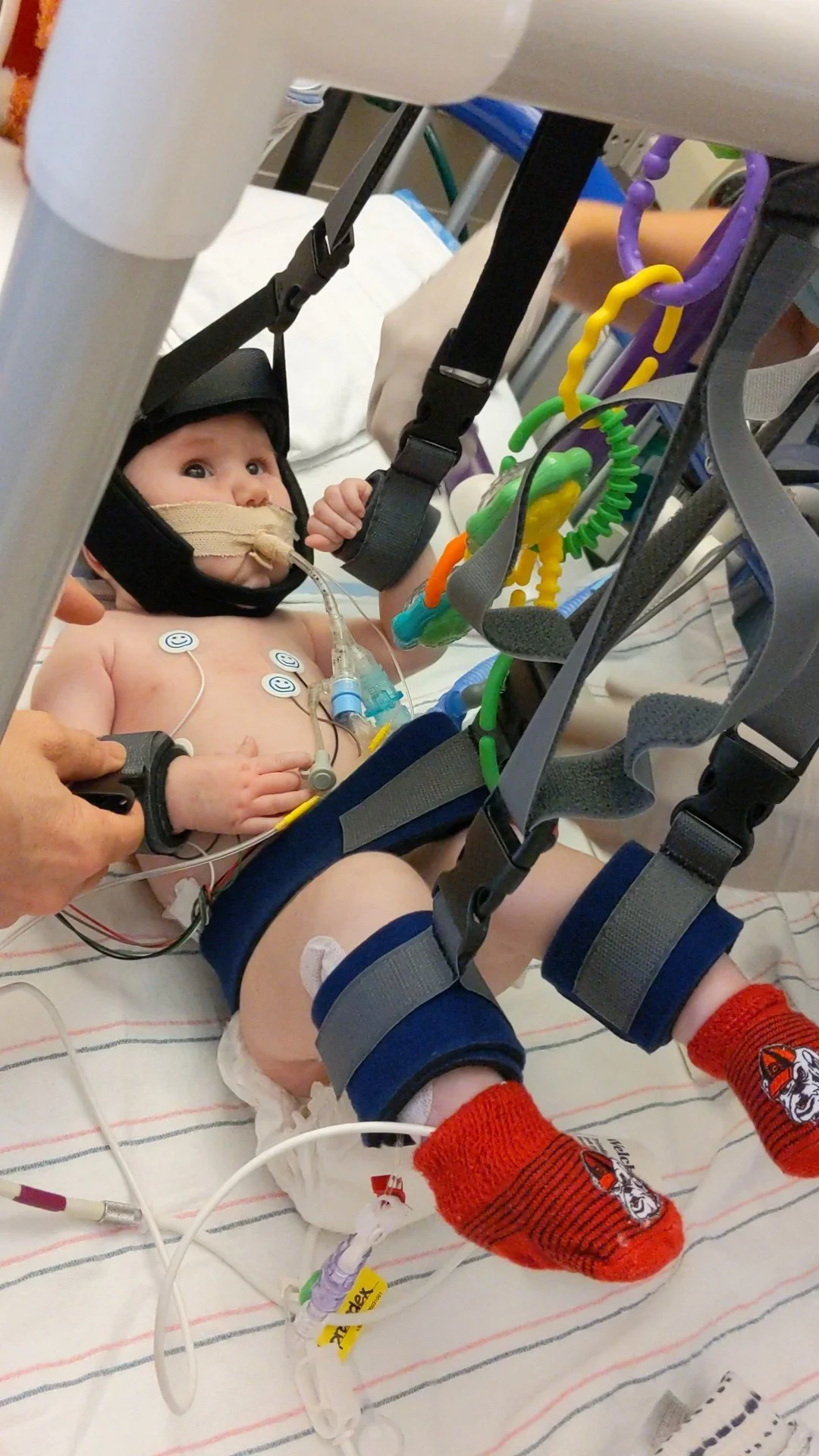
An excellent addition to a hospital’s early mobility program. Parents can use a TPG to keep their child moving while in the hospital and after discharge home.
NEO has a low footprint frame that fits in NICU and infant hospital beds. Long hospitalizations are a perfect time to assess the intervention value, train caregivers, and pass discharge competencies. Families in the research study said they would have been more engaged with their child at bedside if NEO was available in their unit and that it was easier to learn to use than ventilator/tracheostomy/g-tube care or CPR.
Hospital2Home Therapeutic Play Gym (H2H)
H2H is designed for older infants through adolescents experiencing long-term movement poverty and community rehabilitation access barriers. Families can pass discharge competencies and confidently leave the hospital with a kit that will grow with the child for 20 years; keeping the cost of daily movement to 25 cents/day.

Many children receive 3-4x/week PT and daily feeding therapy while in the hospital and then cannot access services in their local communities after discharge. The H2H concept was introduced by parents in the research study who said this approach would have enabled them to keep their child progressing developmentally until they could find therapy providers in their community. Join us in the knowledge translation effort by sharing this with your medical providers.
Hospital Teams
Watch this 5 min video that explains the impact of a Hospital2Home approach.
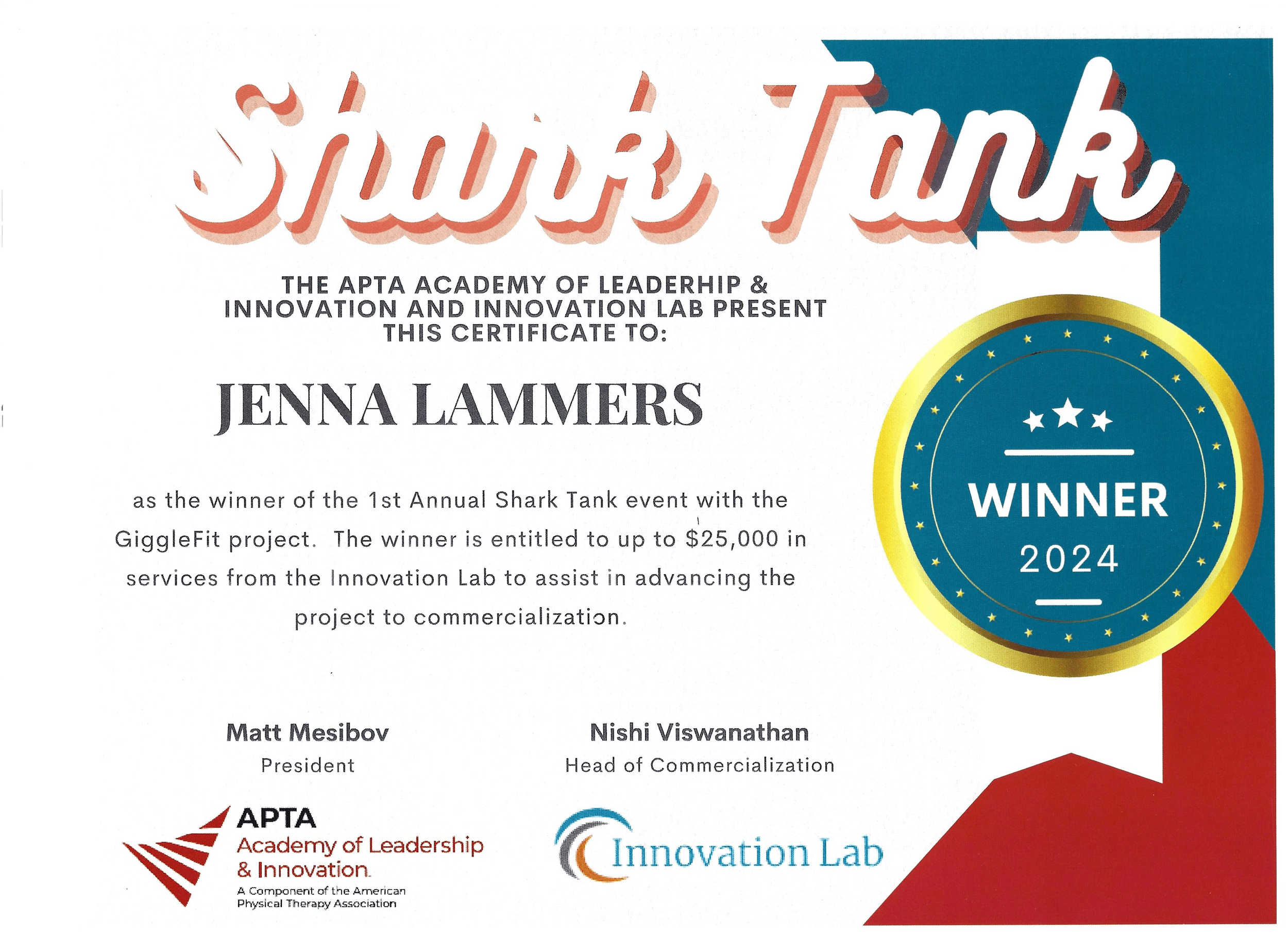
Our Hospital-2-Home Concept won the inaugural APTA PT Shark Tank award; the UF Health Champions for Change award, and the Trauma Informed Innovation Poster award at the Science and Soul Conference

In 2024 the Pediatric Physical Therapy Journal published a case series “Therapeutic Play Gym: Feasibility of a Caregiver-Mediated Exercise System for NICU graduates with Neuromuscular Weakness”

Parents, Private Practice, EI, School Teams
We now offer Expert Training Kits for single and multi-child use. Please fill out the contact information section below and we will guide you through the measurement and ordering process.

Meet daily users and hear how TPG training is improving outcomes for their children
Claire is a mom of a 9 year old with CP microgyria and has a message for parents who are considering the TPG for home exercises.
Claire spends 1 minute setting Colt (9 yo) up for his daily tummy time exercise. After 6 months of 20 min/day prone training Colt has become an independent sitter; holding his head up on his own.
Anthony describes the value of partial body weight support activities for his son Lincoln; an 11 year-old daily user.
Everett (4 yo) initiates hugging his mom for the first time after 6 months of home training. He received 60 PT visits during his 5 month initial hospitalization and could only access 12 PT visits over a 2 year period after discharge. His mother was able to progress his motor development at home.
Rebecca and Isaac (3 yo) live in a rural community and drive over an hour to access therapy services. They share about the home TPG training they have been doing since Isaac was 5 months old.
Brittany Aquart (owner of Lemon City Collective in Miami, FL) and Cameron (8 yo) describe how they use the TPG in fun therapy sessions to improve his fitness, function, and participation with family and friends